

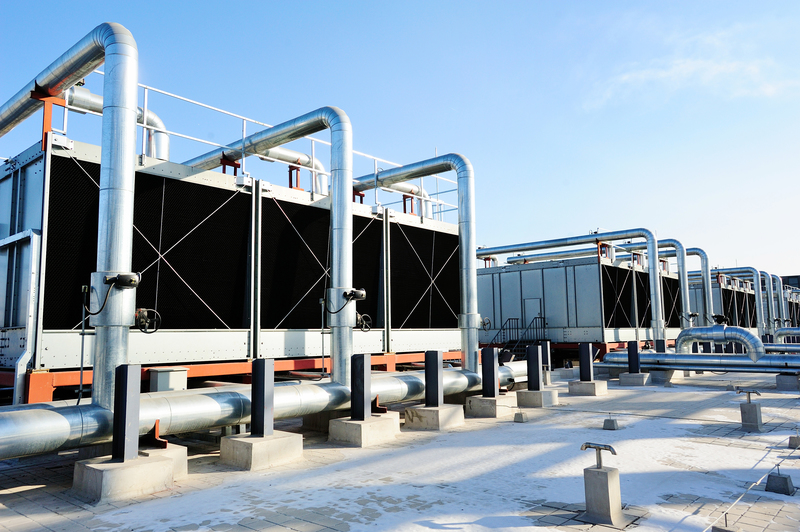
If you manage a cooling tower system, mineral scaling is one of the most persistent operational problems you might face. Scale deposits increase energy consumption, accelerate wear on critical components, and can lead to unplanned downtime. The good news is that cooling tower scaling is largely preventable with the right water treatment program in place.
What Is Cooling Tower Scaling?
Cooling tower scaling occurs when dissolved minerals in the circulating water precipitate out and form hard deposits on internal surfaces. These mineral deposits accumulate on heat exchangers, fill media, distribution nozzles, and basin walls. The result looks similar to the limescale you might find inside a kettle, like a chalky, white or gray crust that builds up over time.
The minerals most responsible for scaling, calcium, iron, sulfate, and silica are naturally present in most water supplies. As water chemistry conditions, temperature and pH shift in the circulating water, minerals can become less soluble and begin to precipitate.
What Causes Scale Formation?
Cooling towers reject heat through evaporation. As water evaporates, the dissolved minerals stay behind in the remaining water. Over successive cycles, those mineral concentration levels can rise until the water becomes saturated, concentrating beyond this point will promote scale formation.
Several factors accelerate this process:
- Hard water: Make-up water with elevated alkalinity, calcium, and magnesium hardness will reach solubility limits faster and at lower cycles of concentration.
- High temperatures: Calcium carbonate and similar compounds become less soluble as water temperature rises, which increases the rate of scale formation on heat transfer surfaces.
- High cycles of concentration (COC): As evaporation continues without adequate blowdown, mineral concentrations multiply. Sometimes the concentrations reach three to eight times in the original make-up water. Without adequate inhibitor treatment, scale formation is inevitable.
How Does Scaling Hurt Your System?
Scale is a poor thermal conductor. Even a relatively thin deposit on a heat exchanger surface significantly reduces heat transfer efficiency, forcing the system to run longer and harder to meet the same cooling load. Research has shown that just 1/4 inch of calcium carbonate scale can increase energy consumption by up to 40%.
Beyond energy losses, cooling tower mineral deposits create a range of secondary problems:
- Restricted water flow through pipes and spray nozzles
- Degradation of fill media, reducing its surface area and cooling effectiveness
- Under-deposit corrosion, where scale traps bacteria and creates an ideal environment for biofilm and under deposit corrosion.
- Increased maintenance frequency and the risk of premature equipment failure due to heat damage or accelerated localized pitting
The longer scaling goes unaddressed, the more expensive it becomes to remediate.
How to Prevent Cooling System Scaling
Effective scale prevention relies on a combination of chemical treatment, operational controls, and monitoring. Here are the core strategies:1. Apply a Chemical Scale Inhibitor
Scale inhibitors, typically phosphonates or polyacrylate polymers, dosed into the circulating water interfere with crystal growth. Rather than removing minerals, they alter the way mineral crystals form, so deposits stay suspended and can be removed through blowdown. The right inhibitor depends on specific water chemistry, particularly calcium, magnesium, iron, and silica concentrations.
2. Control Water Chemistry and pH
Maintaining pH in the range of 7.5 to 8.3 helps prevent calcium carbonate from precipitating. Acid dosing is commonly used to manage alkalinity and keep the water chemistry within an acceptable scaling index. Your water treatment specialist can calculate the Langelier Saturation Index (LSI) for your system, which is a useful indicator of scaling potential.
Visit our value calculators to calculate your potential savings.
3. Manage Blowdown Consistently
Blowdown involves discharging a controlled volume of concentrated water and replacing it with fresh make-up water. This prevents mineral concentrations from climbing too high. Most systems target a specific number of cycles of concentration, typically three to five, and blowdown is adjusted to maintain that target.
4. Monitor Conductivity
Conductivity is a reliable proxy for total dissolved solids (TDS) in the water. Automated controllers can measure conductivity continuously and trigger blowdown when levels exceed a threshold, taking the guesswork out of water management and helping maintain consistent water quality.
What to Do If Scale Has Already Formed
If your system already has significant scale buildup, treatment needs to start with removal before a prevention program can be effective. Cooling tower descaling is typically completed in one of two ways:
- Chemical descaling: Inhibited acids or chelating agents are circulated through the system to dissolve deposits without damaging metal surfaces.
- Mechanical cleaning: Technicians physically remove scale using brushes, hydroblasting, or other tools, which work well for accessible surfaces like basins and fill media.
Following descaling, establishing a proper water treatment program is essential to prevent rapid recurrence.
The Bottom Line
Cooling tower and heat exchange scale formation is a predictable problem with well-established solutions. By understanding how cooling tower mineral deposits form and combining the right chemical treatments with sound operational practices — blowdown management, pH control, and conductivity monitoring — you can protect your equipment, reduce energy costs, and extend the service life of your system.
If you are unsure where to start, Kurita can evaluate your makeup water quality, calculate your system’s scaling potential, and design a program that fits your specific operating conditions.